You've invested hundreds of thousands of dollars into your media infrastructure. Your team knows the system inside and out. Your workflows are humming along.
And then it happens.
Your vendor announces a "sunset." A price hike. A forced migration to their cloud platform: whether you like it or not.
Suddenly, that "seamless" media asset management system feels more like a trap.
This is the reality of vendor lock-in. And if you're running a creative agency, broadcast operation, or media production house, it's one of the biggest threats to your long-term flexibility: and your budget.
The good news? There's a better way.
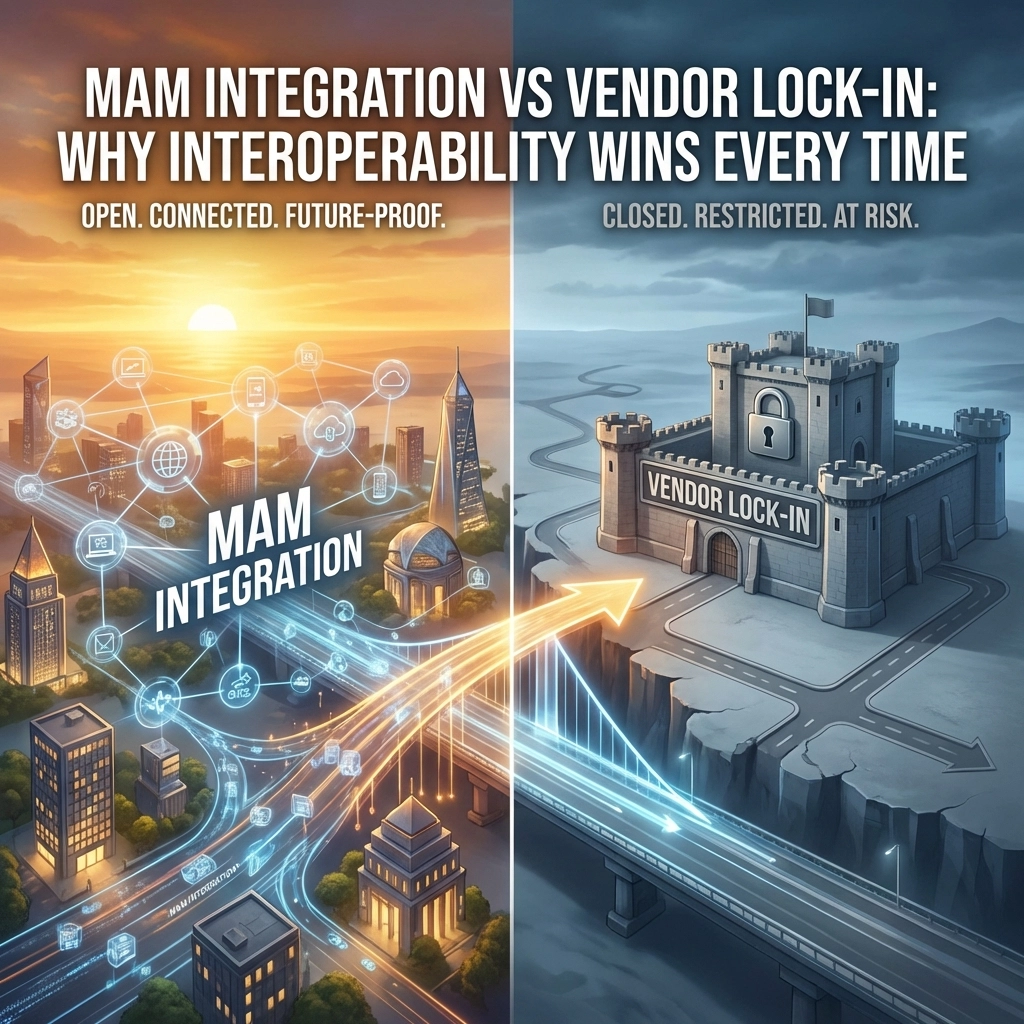
Interoperability isn't just a buzzword. It's a strategy. And when you build your MAM ecosystem around open standards and flexible integrations, you take back control.
Let's break down why interoperability wins every time: and how you can future-proof your media workflows starting today.
🔒 What Is Vendor Lock-In (And Why Should You Care)?
Vendor lock-in happens when your systems, data, and workflows become so tightly coupled to a single vendor's proprietary technology that switching becomes painful: or nearly impossible.
It shows up in a few ways:
- Proprietary file formats that don't play nice with other tools
- Closed APIs that limit what you can connect or automate
- Licensing models that penalize you for scaling or migrating
- Data silos that make exporting your own content a nightmare
For media teams, this is especially dangerous.
Your assets: raw footage, graphics, audio files, final deliverables: are the lifeblood of your operation. If they're trapped inside a system you can't easily move away from, you're not really in control.
That's a problem.
💸 The Hidden Costs of Being Locked In
Let's talk numbers.
Vendor lock-in doesn't just limit your options: it hits your bottom line in ways that aren't always obvious.

1. Migration costs skyrocket.
When you finally do need to switch platforms, you're looking at expensive data extraction, reformatting, and re-integration. Projects that should take weeks turn into months-long ordeals.
2. You lose negotiating power.
If your vendor knows you can't leave, why would they offer you a better deal? Locked-in customers pay premium prices: because they have no leverage.
3. Innovation stalls.
Want to add a new AI-powered metadata tool? A cloud archive solution? A better transcoding engine? If your MAM doesn't integrate easily, you're stuck waiting for your vendor to build it: or you're paying through the nose for custom development.
4. Your team gets frustrated.
Workarounds. Manual processes. Clunky interfaces. When your tools don't talk to each other, your people spend more time fighting the system than doing creative work.
🧩 Why Interoperability Changes Everything
Here's the flip side.
When your media asset management system is built around open standards and interoperability, everything changes.
You can swap components without blowing up your entire workflow. Need a better transcoding solution? Plug it in. Want to move to a different cloud provider? No problem. Your MAM becomes modular: not monolithic.
You future-proof your investment. Technology evolves fast. Open, interoperable systems let you adopt new tools and innovations without starting from scratch.
You keep your options open. No more being held hostage by a single vendor's roadmap. You decide what's best for your team: and you can actually act on it.
You reduce total cost of ownership. Less custom development. Easier migrations. More competitive vendor pricing. That's real money back in your budget.
🔑 What to Look For in an Interoperable MAM
Not all MAM systems are created equal when it comes to openness and flexibility.
Here's what to prioritize:
✅ Open APIs
Can you connect your MAM to your NLE, cloud storage, transcoding engine, and automation tools without jumping through hoops? If the answer is no: or "only with expensive custom development": that's a red flag.
✅ Support for industry-standard formats
Your system should handle common file types, metadata schemas, and exchange formats without forcing proprietary conversions.
✅ Cloud-agnostic architecture
Whether you're on AWS, Azure, Google Cloud, or a hybrid setup, your MAM shouldn't lock you into a single provider's ecosystem.
✅ Modular design
The best systems let you swap out individual components: storage, processing, delivery: without a full rip-and-replace.
✅ Transparent data portability
You should be able to export your assets and metadata easily, in formats you can actually use elsewhere. If a vendor makes this difficult, ask yourself why.

⚡ How 1303 Systems Approaches MAM Integration
At 1303 Systems, we've seen firsthand what happens when media teams get trapped by inflexible systems.
That's why we take a different approach.
We design for flexibility from day one. Our broadcast systems integration work prioritizes open standards, modular architecture, and seamless connectivity: so your MAM plays nicely with everything else in your ecosystem.
We leverage AI to supercharge your workflows. From automated metadata tagging to intelligent media ingest, our AI-driven solutions help you work faster: without locking you into proprietary black boxes.
We provide white-glove support. Integration projects can get complicated. Our team walks you through every step, from planning to deployment to ongoing optimization. You're never left figuring it out alone.
We build for the long haul. Our goal isn't just to solve today's problem: it's to set you up for whatever comes next. That means systems that scale, adapt, and evolve with your business.
🌎 Real-World Wins: What Interoperability Looks Like in Action
Let's make this concrete.
Imagine a mid-sized broadcast operation that's been running the same MAM for a decade. They're hitting limits: slow search, clunky ingest, no AI capabilities. Their vendor wants a six-figure upgrade to their proprietary platform.
With an interoperable approach, they have options.
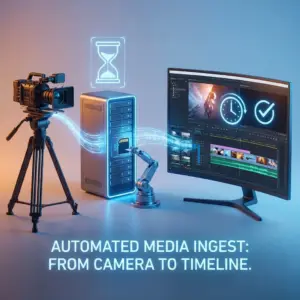
They can keep their existing storage infrastructure and layer in a modern, open MAM. They can add media ingest automation without ripping out everything else. They can integrate AI tools from best-in-class providers: not just whatever their legacy vendor happens to offer.
The result? A faster, smarter workflow: at a fraction of the cost. And when the next technology shift comes along, they'll be ready.
That's the power of interoperability.

🎯 The Bottom Line
Vendor lock-in is a trap. And in the fast-moving world of media production, it's one you can't afford to fall into.
Interoperability gives you freedom. Flexibility. Control over your own infrastructure and your own future.
Whether you're building a new MAM from scratch or looking to modernize an existing setup, the question isn't whether you can afford to prioritize openness.
It's whether you can afford not to.
📦 Frequently Asked Questions
Q: How do I know if I'm locked into my current MAM vendor?
A: Ask yourself: Can I export my assets and metadata easily? Can I integrate third-party tools without expensive custom work? If the answer to either is "not really," you're probably locked in.
Q: Isn't it risky to move away from a big-name vendor?
A: Staying with a vendor that limits your flexibility is the bigger risk. The right integration partner can help you migrate smoothly: without disrupting your day-to-day operations.
Q: What's the first step toward a more interoperable setup?
A: Start with an honest assessment of your current system's limitations. Then, talk to a systems integrator: like 1303 Systems: who can map out a path forward.
Q: Does interoperability mean sacrificing features or support?
A: Not at all. In fact, open systems often give you access to more innovation, because you can choose best-of-breed tools instead of settling for whatever one vendor provides.
🛠️ Ready to Break Free from Vendor Lock-In?
If your current MAM is holding you back: or if you're building something new and want to get it right from the start: we'd love to talk.
Contact the 1303 Systems team today for a free consultation. Let's build something flexible, future-proof, and entirely yours.