You just wrapped a shoot.
Cards are full. Hard drives are stacking up. And somewhere between the camera and the edit bay, hours of your life are about to vanish into the void of manual file handling.
Sound familiar?
Here's the thing, that gap between capturing footage and actually editing it? That's where post-production teams lose the most time. And most of them don't even realize it.
But it doesn't have to be this way.
The Hidden Time Sink Nobody Talks About
Let's be real. When people think about post-production bottlenecks, they think color grading. Sound design. Client revisions that never end.
But the real productivity killer happens before an editor even opens their timeline.
🎯 Copying files from camera cards to storage.
🎯 Renaming clips with proper naming conventions.
🎯 Creating folder structures that make sense.
🎯 Transcoding footage into edit-friendly formats.
🎯 Adding metadata so you can actually find things later.
🎯 Verifying nothing got corrupted in the transfer.
That's hours. Every. Single. Project.
And if you're working with multiple cameras, multiple days, or, heaven forbid, multiple locations? Multiply that pain.
This is the ingest bottleneck. And it's eating your budget alive.
What Automated Media Ingest Actually Does
Automated ingest isn't some futuristic fantasy. It's happening right now in post houses that refuse to waste time on repetitive tasks.
Here's the workflow transformation we're talking about:
Before automation:
- Manually copy files from each card
- Pray nothing gets corrupted
- Rename everything by hand
- Build folder structures manually
- Transcode to ProRes or DNx
- Add basic metadata tags
- Finally start editing
After automation:
- Plug in the card
- Start editing
That's it. That's the difference.
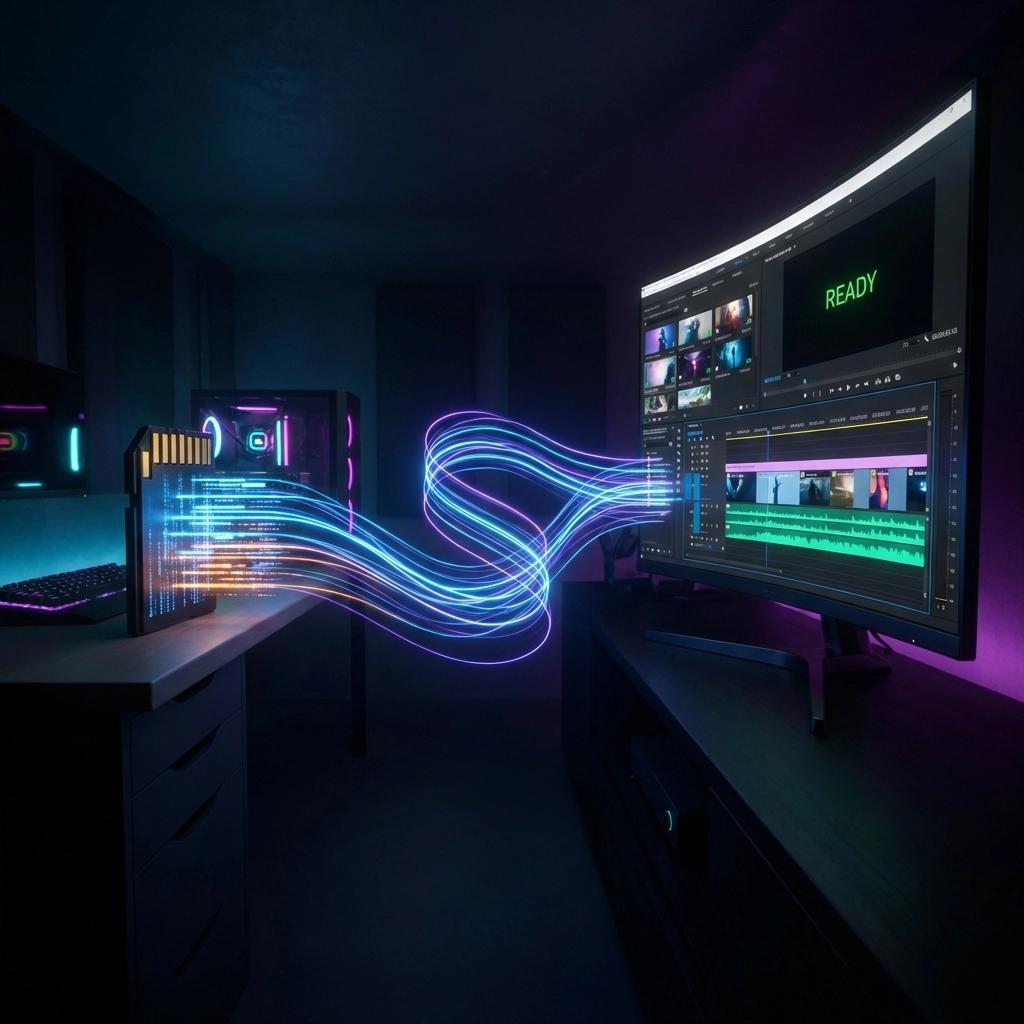
Automated ingest systems handle everything in the background. The moment media hits your system, it's being copied, verified, transcoded, organized, and tagged, all without you lifting a finger.
The result? Editors spend their time editing. Not babysitting file transfers.
The Real Numbers Behind the Time Savings
Let's talk specifics. Because "saves time" means nothing without context.
A typical documentary shoot might generate 500GB to 2TB of footage per day. A commercial production with multiple cameras? Even more.
Manual ingest for that volume takes:
- 30-60 minutes just for verified copying
- 15-30 minutes for organization and renaming
- 1-2 hours for transcoding (depending on format)
- 20-30 minutes for basic metadata entry
That's potentially 3+ hours before anyone touches a timeline. Per day. Per project.
Automated ingest? It runs in parallel. While one process copies, another transcodes. While transcoding happens, metadata gets generated. Your editor can start working on proxies within minutes of the card hitting the system.
We're talking about a 60-70% reduction in pre-edit overhead. That's huge.
And here's what really matters, those hours add up. Over a year, a busy post house might reclaim hundreds of hours. Hours that translate directly into more projects, faster turnarounds, and happier clients.
Beyond Copying: The Intelligence Layer
Modern automated ingest solutions don't just move files around. They understand what they're moving.
🧩 AI-powered scene detection , The system identifies distinct scenes, camera angles, and shot types automatically.
🧩 Automatic transcription , Dialogue gets transcribed as files ingest. No more waiting for a separate transcription pass.
🧩 Face and object recognition , Footage gets tagged with who and what appears in each clip.
🧩 Intelligent organization , Files route themselves to the right folders based on camera, date, scene, or custom rules you define.
🧩 Checksum verification , Every file transfer gets verified. No more wondering if that one clip is corrupted.
This isn't just about speed. It's about searchability.
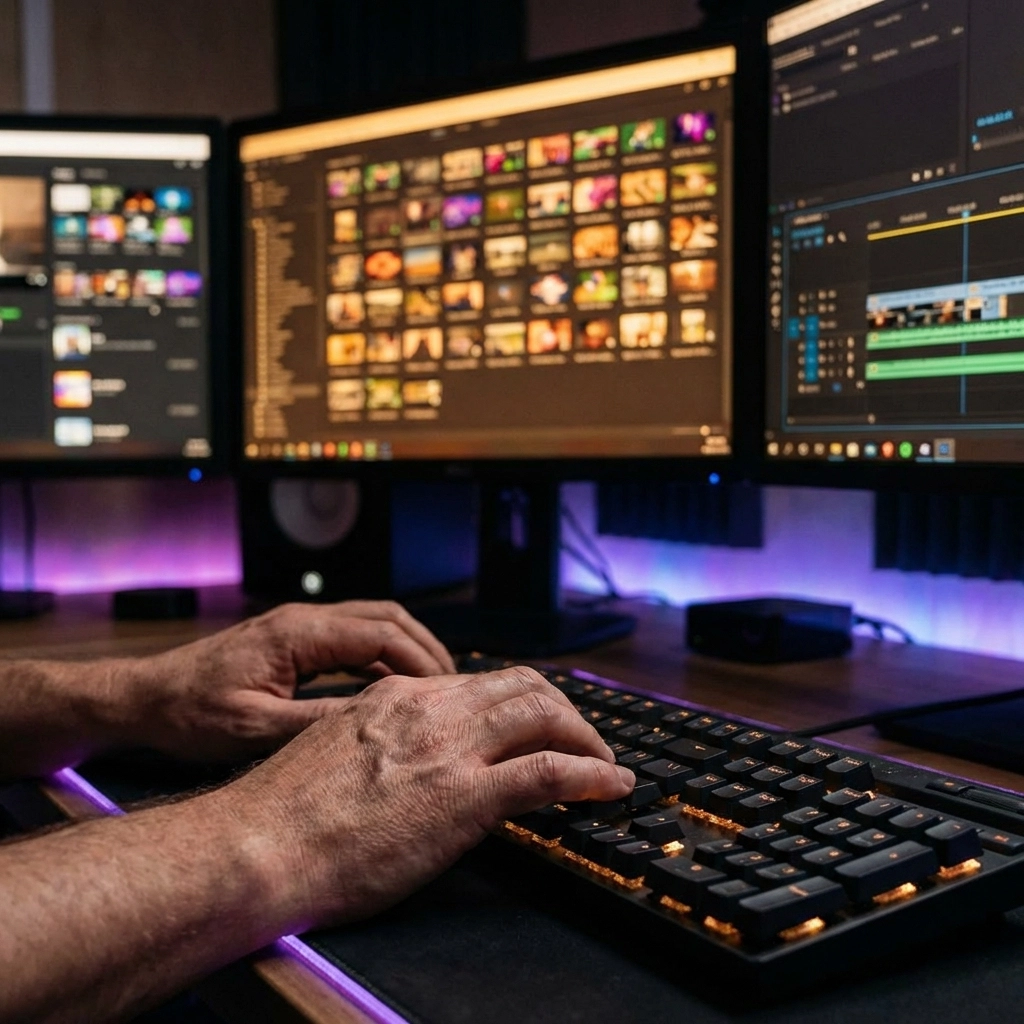
Ever tried to find that one perfect B-roll shot from a shoot three months ago? Without proper metadata, you're scrubbing through hours of footage. With automated tagging, you're searching "sunset" or "interview" and finding it in seconds.
The Collaboration Multiplier
Here's where it gets really interesting for distributed teams.
Automated ingest doesn't just help the editor sitting in front of the RAID. It transforms how entire teams work together.
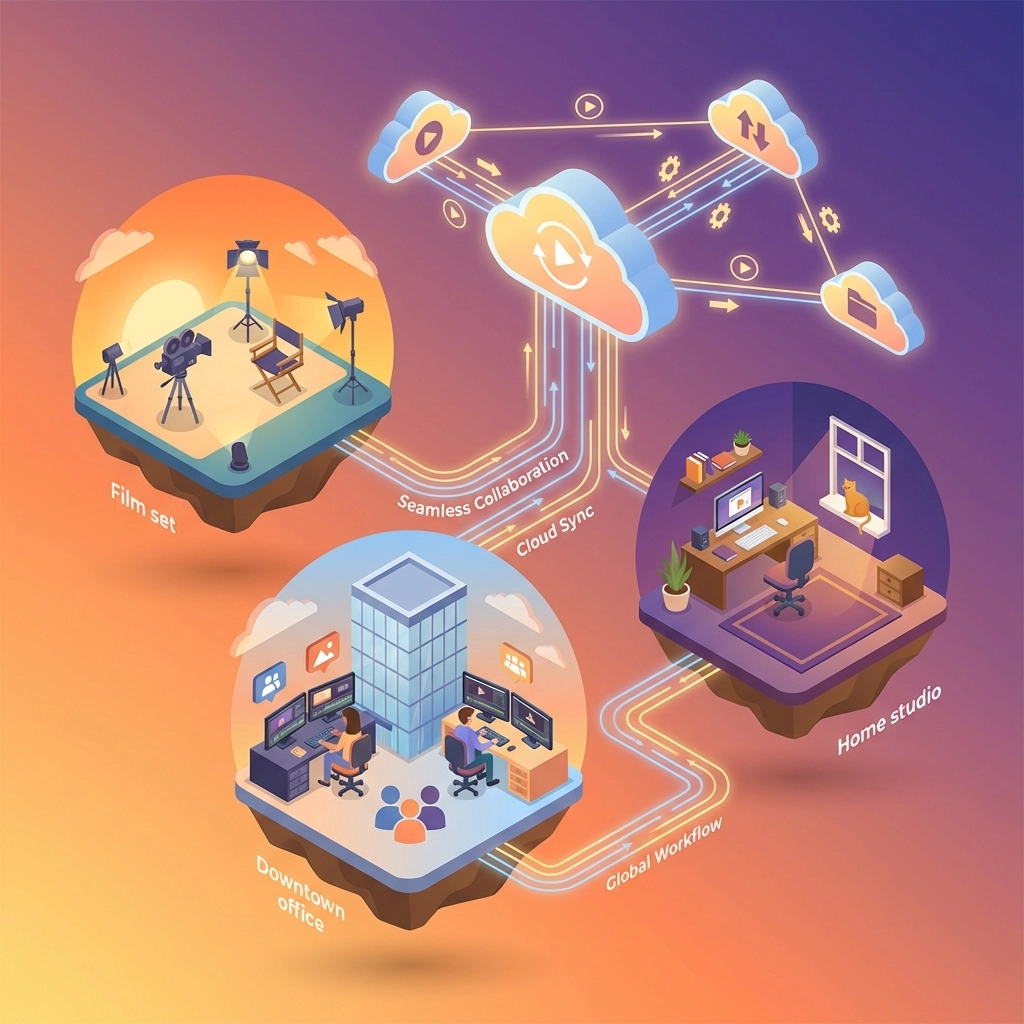
On-set to post sync , DITs can trigger ingest workflows that immediately make footage available to remote editors. Someone in Atlanta can start pulling selects while the camera's still rolling in Los Angeles.
Proxy generation , Low-res proxies get created automatically, letting editors work on lightweight files while full-resolution media finishes processing in the background.
Cloud integration , Footage can route to cloud storage automatically, creating offsite backups and enabling remote access without manual uploads.
This is especially critical for post houses juggling multiple clients and tight deadlines. The old model of "wait for the drive to arrive" is dead. Smart MAM integration means your team starts working the moment footage exists.
What This Looks Like in Practice
Let's paint a picture.
A production company wraps a 3-day corporate shoot. Multiple cameras. Interviews. B-roll. The whole package.
Old workflow:
- Day 4: AE spends the morning copying and organizing footage
- Day 4 afternoon: Transcoding begins
- Day 5: Editor finally starts assembly
- Day 7: First rough cut delivered
Automated workflow:
- Day 3 evening: Final cards ingest while crew wraps
- Day 4 morning: Editor opens a fully organized, transcoded, searchable project
- Day 5: First rough cut delivered
Two full days saved. On a single project.
Now imagine that across every project, every month, every year. The compound effect is massive.
The Foundation Your Post House Needs
Automated ingest isn't a standalone solution. It's part of a larger ecosystem that includes storage architecture, MAM integration, and workflow orchestration.
That's where expertise matters.
Throwing software at the problem without understanding how it fits into your existing infrastructure? That's a recipe for frustration. Different NLEs have different requirements. Different storage solutions have different capabilities. Different teams have different needs.
The goal isn't just automation, it's the right automation for your specific workflow.
At 1303 Systems, we specialize in building these end-to-end solutions. We've seen what works. We've seen what doesn't. And we know how to bridge the gap between raw footage and finished product without the headaches.
Whether you're a boutique post house or a growing facility handling dozens of projects monthly, the fundamentals are the same: eliminate manual bottlenecks, enable your creative team, and build infrastructure that scales with your ambitions.
Ready to Reclaim Those Hours?
The math is simple.
Every hour your team spends on manual ingest is an hour they're not spending on creative work. On client communication. On taking on new projects.
Automated media ingest isn't about replacing people. It's about freeing them to do what they're actually good at, telling stories, solving creative problems, and delivering work that makes clients come back.
The technology exists. The workflows are proven. The only question is whether you're ready to stop treating ingest as "just part of the process" and start treating it as the opportunity it actually is.
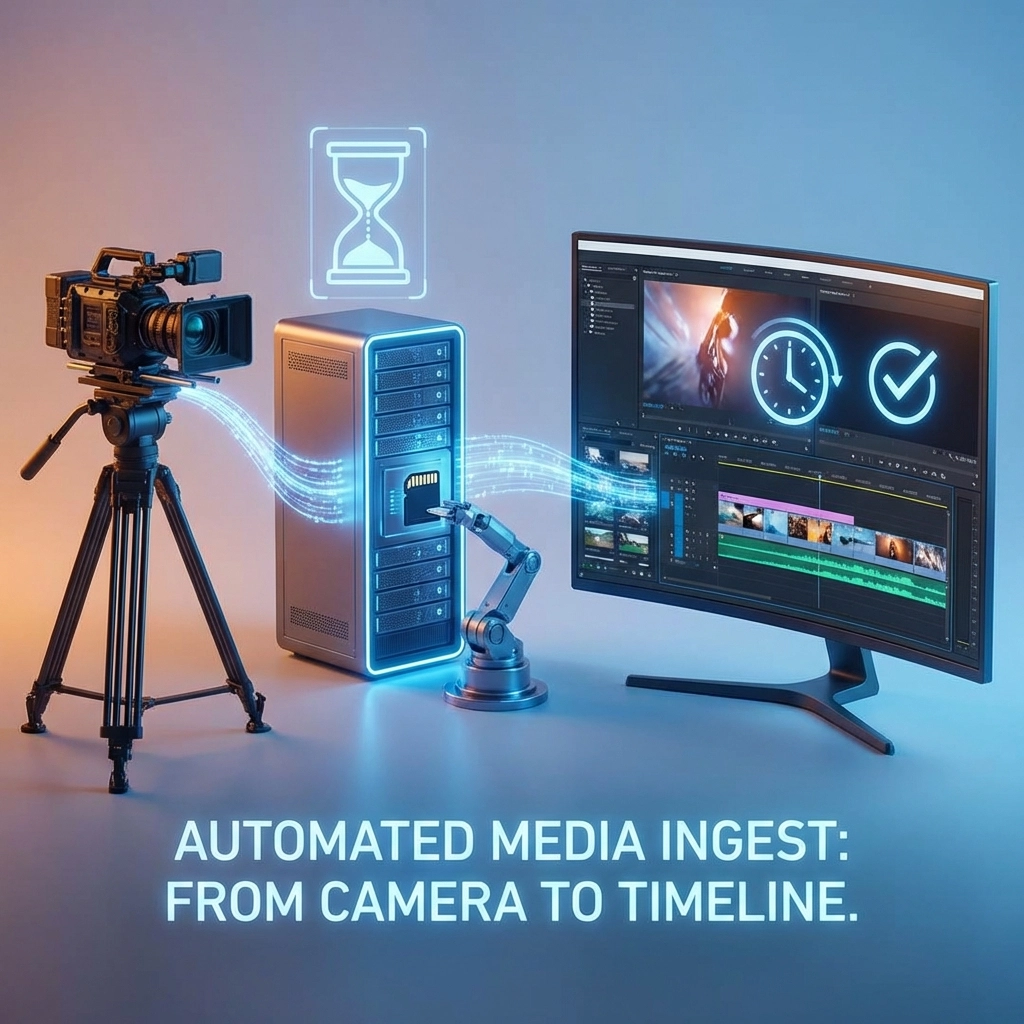
Because from camera to timeline shouldn't take hours.
It should take minutes.
Frequently Asked Questions
How long does it take to implement automated ingest?
Depends on your existing infrastructure, but most post houses are up and running within days, not weeks. The key is proper planning and integration with your current storage and editing systems.
Will this work with my NLE?
Yes. Automated ingest solutions integrate with Premiere, Avid, Resolve, Final Cut: you name it. The output formats and folder structures get customized to match your editorial preferences.
What about existing projects and archives?
Automation can be applied retroactively. Older footage can be re-ingested with new metadata tagging, making your entire archive searchable.
Is this only for large facilities?
Not at all. Smaller post houses often see the biggest relative gains because they don't have dedicated staff for ingest tasks. Automation lets small teams punch above their weight.